A familiar situation
You order based on what the last project needed, and a little early to be safe. The site calls on Tuesday and needs the goods on Wednesday; the installation is actually next week. The intermediate stock balance is in a spreadsheet that was updated last week. The supplier sent a confirmation by email that somebody received, but nobody remembers who.
When something is missing, the investigation starts with a round of phone calls. When there is too much of something, it stands on site, takes up space and gets damaged.
What changes
You order according to what is actually being built
Plans become need data by space and work phase. The need comes from the work schedule, not from an estimate or a gut feeling. An approved product catalogue and shared item naming make sure that ordered, designed and delivered all mean the same product.
Availability risk shows before it becomes a delay
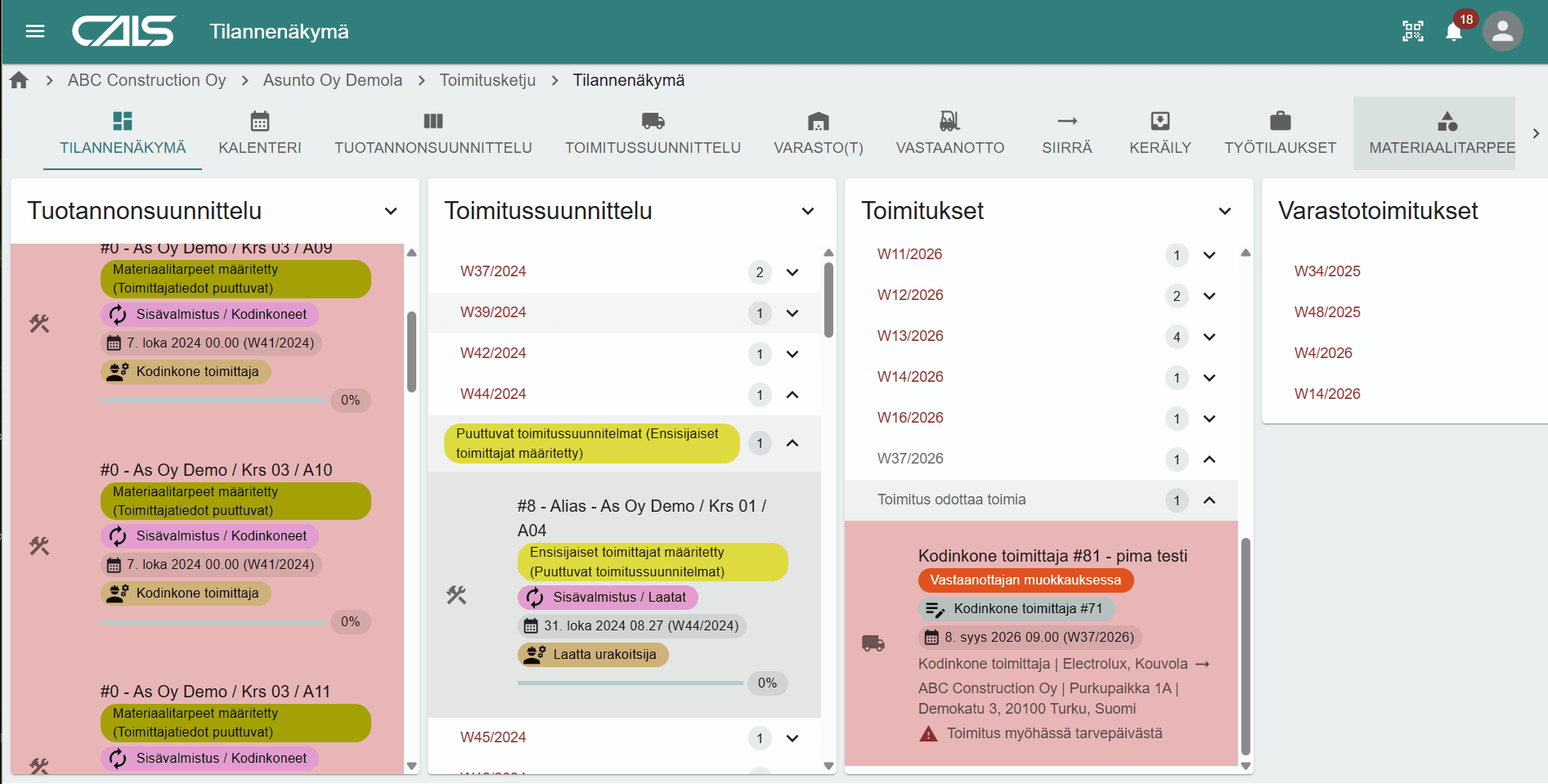
Order, confirmation and delivery sit in the same view in real time. A missing confirmation or a moved delivery date is colour-coded into view while there are still alternatives.
The stock balance is actually current, not current in principle
Receipts, transfers and picking are recorded on mobile at the moment they happen. On a busy week the difference shows immediately: the system tells you what is in stock, even when nobody has had time to report anything.
The site’s call-ins build a forecast
When work phases call in material through the system, you see the coming demand in advance instead of as individual phone calls. Over time the call-ins form a picture of what the site really needs and at what pace, so replenishment no longer has to be timed on safety margins.
A deviation attaches to the order, not to someone’s memory
A shortage, damage or a wrong item is recorded at goods receiving in the same entry as the receipt itself. The back-order shows at the right point in the chain. As deviations accumulate, the conversation with the supplier is based on documented history rather than impressions.
Suppliers join at no cost
In the supplier portal, a supplier sees their own orders, schedules and delivery locations, and only their own. Other suppliers’ information is not visible to them. Using the portal costs the supplier nothing and requires no purchase on their side.
In practice this means that expanding the network is not a negotiation: you can include every supplier in the project, the small ones too.
“You can see the orders really clearly here. And it took no time at all to learn.” – K-Rauta, Oulu
What this asks of you
Suppliers are trained as their own group. You can run the training yourself or leave it to us.
Target values for lead times and order margins are set according to where you want to get to, not according to where you are now, and they are refined once you see how the site actually works.
Next step
Let’s start with scoping
The first conversation takes an hour and already tells you a lot about where your material flow is getting stuck.