The project network
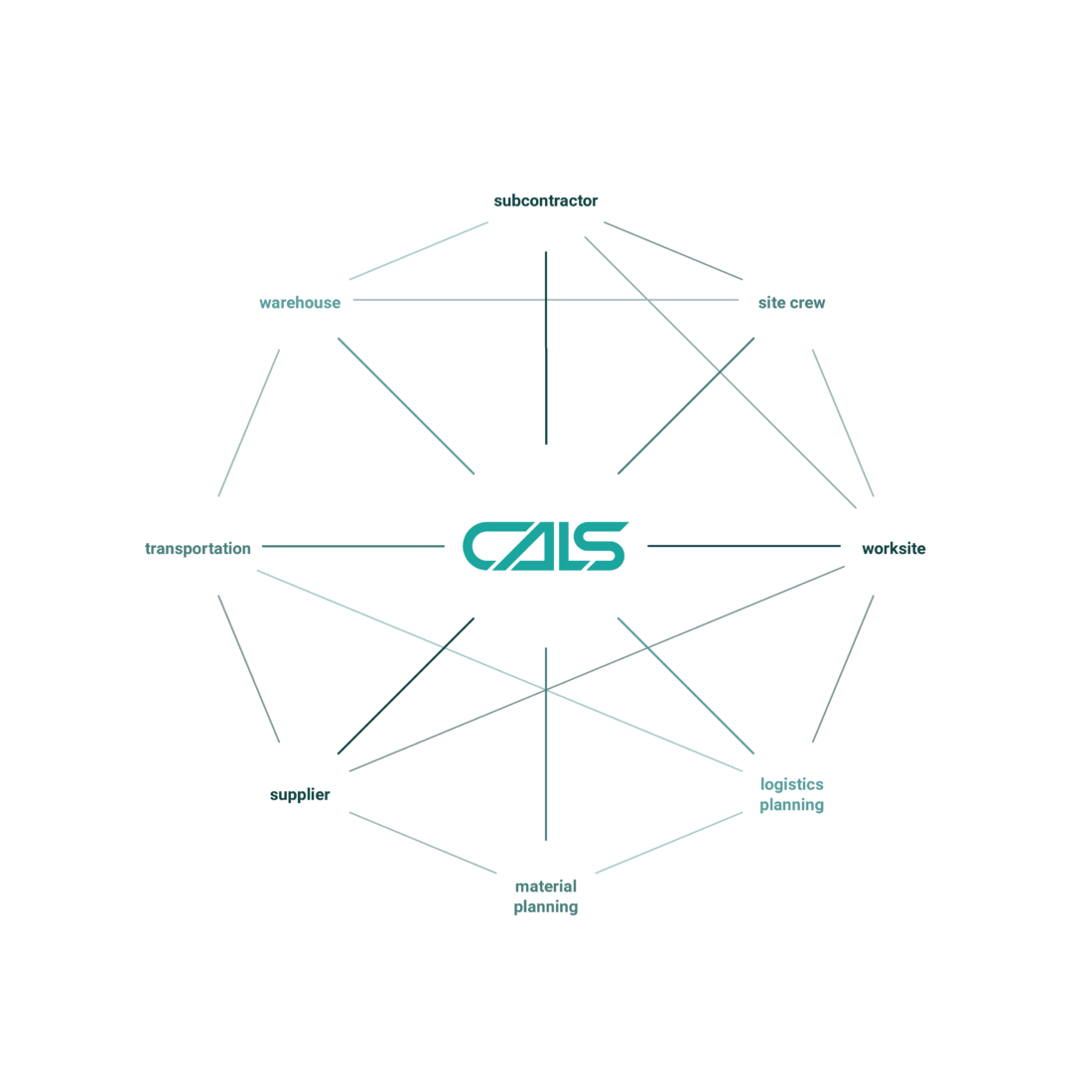
CALS connects the network
CALS builds a network of parties around it, and the information they produce is what makes logistics flow. Real-time visibility into the supply chain lets you anticipate delays and keep the schedule under control. Material certificates and origin data travel digitally, which improves quality and makes compliance easier to prove. Tracking hazardous substances and keeping safety data sheets current improves safety on site.
CALS Site
Deviations that are worth recording get recorded
Logging a deviation is quick enough that the small ones go in too. They can be filtered by contractor, so costs land where they belong — and across several projects they say something about who logistics has actually worked well with.
CALS Site
The instruction travels with the task
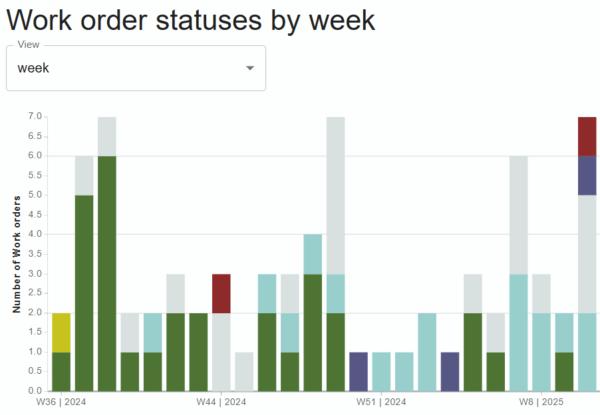
Work orders are received, scheduled and signed off digitally, and the state of each task stays current without separate reporting.
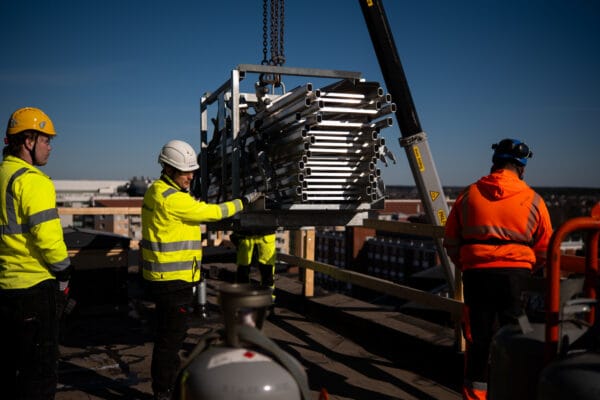
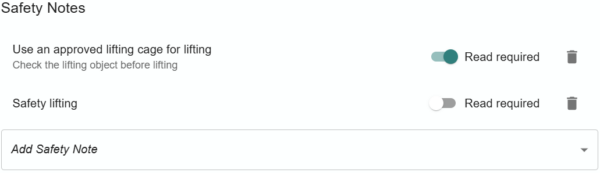
The safety instruction belongs to the task and has to be read before the task can be started. It reaches the person doing the work rather than a folder nobody opens.
CALS Site
Deviations that are worth recording get recorded
Logging a deviation is quick enough that the small ones go in too. They can be filtered by contractor, so costs land where they belong — and across several projects they say something about who logistics has actually worked well with.
“Hauled and moved materials are photographed into the system when they reach their destination. Nine times out of ten, goods that have gone missing are found because of those pictures — you know where they have been and what the packaging looks like.”
Matias Helenius, Logistics Engineer, Carinafour
CALS Supply Chain
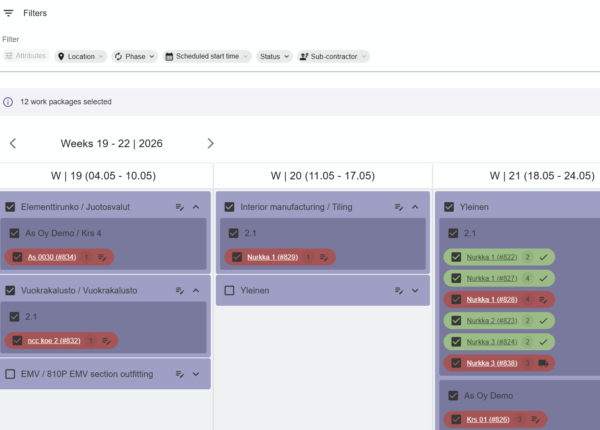
Plans become need data
Design data turns into need by space and work phase, so ordering follows the work schedule rather than an estimate of it. Deliveries are routed to the workstation where the work is done, not only to the site gate.
CALS Supply Chain
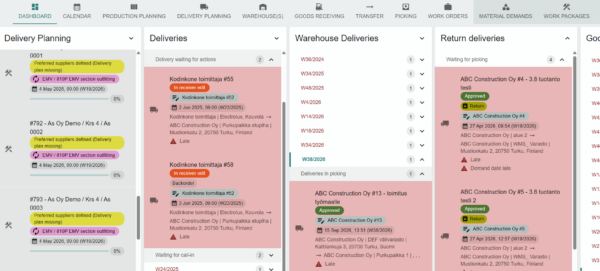
Order, confirmation and delivery in one view
Orders and availability checks are made digitally with the supplier. Colour coding carries the status, so a missing confirmation or a delivery date that has moved shows while there are still alternatives.
CALS Warehouse Management
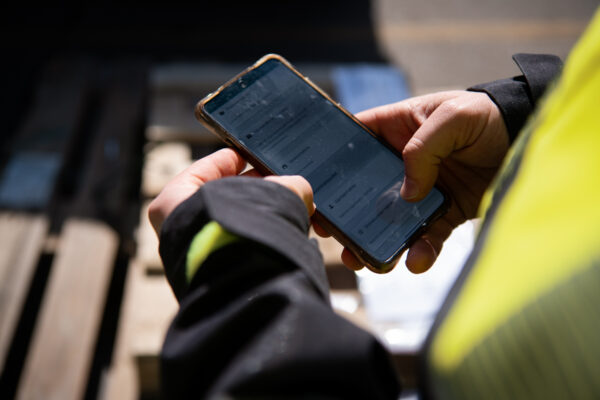
Every event knows who, when and which batch
Receipts, transfers and picking are recorded on mobile at the moment they happen, so the balance corrects itself immediately and the site does not call in material that is not there.
When material goes missing or is damaged, the investigation starts from the event chain rather than from guesswork. On projects where responsibility changes hands several times on the way to the wall, that is the difference between a claim and an argument.
CALS Warehouse Management
Warehouse portal, or warehouse management?
The warehouse portal is included in CALS Supply Chain and is enough when one intermediate store serves one project and material moves on call-in. CALS Warehouse is for many item codes, your own warehouse staff, material moving between projects, or events that need tracing at batch and location level.
The portal tells you the quantity; warehouse management also tells you the shelf. You do not have to decide at the start — both use the same data, so extending is added functionality rather than a new deployment.
CALS Site Management and CALS Supply Chain Managemen are independent — take one, or both. CALS Warehouse is an extension of CALS Supply Chain. Licensing is per project and module, not per user, and the suppliers, warehouse and logistics partners in your project network use it at no cost. It is worth including everyone the information helps.
CALS is a tool, not a logistics service. It works with any logistics partner you choose, including your own organisation, and using it does not require buying a service alongside it.